Mutazione: How to continue a story after the game ends
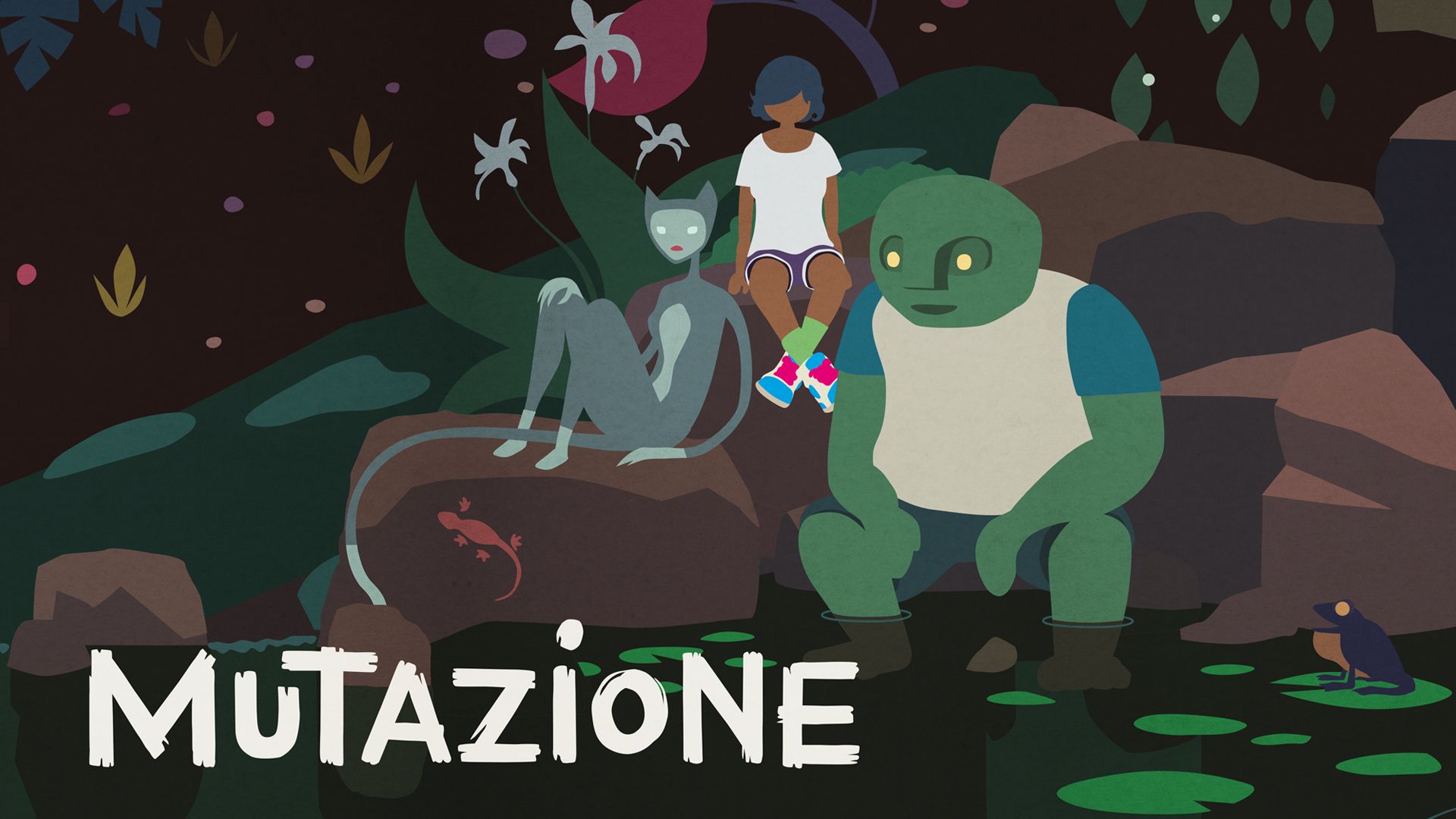
This summer I had some spare time after finishing my Master's thesis, the last piece missing to my university degree. I picked up my Nintendo Switch again, as I remembered playing Mutazione by Die Gute Fabrik a few summers ago (then on Apple Arcade), and wanted to relive the atmosphere I remembered as being mainly story driven and visually very appealing. If you are interested in experiencing the game without any spoilers, I recommend first playing the game for yourself before reading this post. I won't get into details story-wise, but still.
The second playthrough did not let me down. Apart from the captivating story and the immensly impressing visuals, this time I mostly noticed two things: how the time-mechanics are shaping the gameplay as well as how the story is continued in the Gardens mini-game after the main story has ended. The latter are, imo, a continuation of the story in a different mode, disjunct but also make (and give) so much sense as a continuation of the story.
Time Mechanics
The game is timewise structured as follows: Each day is sectioned into Dawn, Morning, Midday, Afternoon, Evening, Night and Late Night; Dawn is sometimes skipped if Kai sleeps in. The current slice of day ends when the player is talking to a specific person which shows a speech bubble containing a small clock instead of the ususal normal speech bubble. The player is thus in control of whether the next part of the day should be started, and might choose to first talk to some other inhabitants of Mutazione instead.
Off-track section #1
Apart from the time mechanics, which is very much intervowen with the story telling, in the story itself, time is also quite interesting. Mutazione got its name through the mutations the few surviving inhabitants of the island experienced after a meteor hit it some decades (maybe 50-60?) years ago. This event, leading to the extraordinarity of the town and the island, is told as if sepia colored in the far past, while being so monumental that all relates back to it. This makes the story feel like it is taking place in a future and sort of fell out of time by standing still, not advancing and still healing from the meteor strike. This feeling is enhanced by the fact that due to the incident, modern infrastructure is not overgrown and its space reclaimed by nature; this can be discovered by the player in the Wilderness" part of the map. Also, small as the community may be, there is a whole building dedicated to an archive, where research into the past is being done by a community member, which states the importance of the past. This feeling of a sort of lost present -- a village after a forever-changeing event and all but "modern" -- is enhanced by some of the stories and worries of the inhabitants. While almost all of them seem to like the community they live in, a lot are either mourning people that passed or abandoned them in the past or trying to cope with choices from years ago; others have unclear wishes for the future. The player however gets time to be very much in the present with gardening, staying in one time-of-day for as long as they want; maybe this can later be transferred to the community after sharing the gardens.The story has finished ... or has it?
Already thorughout the story, whenever a new garden is discovered, it becomes playable in Gardens. Now, this could have just been a possibility for the player to try out different configuartions of flowers -- sticking to the one established in the story, or trying different ones -- in the locations from the game. Or spend more time in them, as they are quite fast to play through in the story, but offer quite a lot. Be that as it may, they tie in very organically with the game. This is for multiple reasons:
Again, the same times of day are used, this time to give the plants room to grow as well as letting some of the characters appear in the gardens routinely, fishing, sitting and watching the gardens, one even doing Tai-Chi at dawn, just as she did in the story. Like this, the routines of the characters continue on, even after playing the story has finished. This gives the impression that time in Mutazione goes on, even if the main character is back on main land, and the player gets a glimpse back on the community through the gardens. In contrast to the main story, where time can stretch until the player chooses to finish a section by performing a certain action, here the time can be halted or sped up. Also, over time -- maybe planted by members of the community? -- more plants appear in the gardens, can be harvested by the player and thus propagated and replanted elsewhere. Like so, the player can build up a collection of seeds of the plants of Mutazione. The gardens are each worthy of being dynamic wallpapers, the artwork really is stunning. The weather can change from sunny to rain, the colors change with the time of day ... This really invites to just watch the garden for a while when playing. The fact that often, the character's activity through the day is only visible in Listen mode (this is when watching the Gardens -- the flowers also emit sounds, it makes complete sense after the story, trust me) also encourages to enjoy the garden and get a glimpse of the characters one gets to love through such a game. This of course is also quite a fan service, as usually after games, where you get to know characters quite initmately, the suddennes of the ending leaves players wanting for more, wanting to know how things continue after the game, and seeing them still in their habits is comforting.
Another part of the game is Letters, which gets unlocked only after the story has ended. Here, the main characters is writing to and recieving letters from the inhabitants of the island, the story goes on even more explicitely than through the gardens. Time is also a factor, as the player has to wait a day or two for the next letter to show up in Letters. This of course is even more concrete fan-service to the urge to know how a story continues than the gardens. But I still think the use of time, the routines of the inhabitants during the gardening after the stroy is extremely clever, and to me more satisfying than the letters by themselves. The letters also encourage the Gardens; the characters send seeds that then are plantable in the gardens.
Off-track section #2
As I could piece together from the blogposts from Die Gute Fabrik here, the gardens are a feature that was added and updated some months to years after the original game release. The history very roughly:- Original launch: 2019
- Free feature update Garden mode: October 2020
- Release on Switch and XBox: May 2021
- Final free update: more seeds and sounds for the Gardens September 2022
Personal Note
The second playthrough of Mutazione was even more fun than the first one, even though I only vaguely remember it. Even though I finished the story a few weeks ago, I still pick up my Switch to check in on the gardens, see how my plants and the community are doing. I am looking forward to playing Seasalt Chronicles, also by Die Gute Fabrik which is promising a similarly fascinating story telling mechanic.
word count
0
ten most frequent words: